Depth psychology · Existential work
Depth psychology therapy
I offer depth psychology therapy: long individual processes for existential crises, grief, life ruptures and deep transformation. I work in person in Barcelona and online, in English and in Spanish.
Psychoanalysis · Depth Psychology · Inner Architecture™
In person in Barcelona and online · Sessions of 50 minutes · English and Spanish
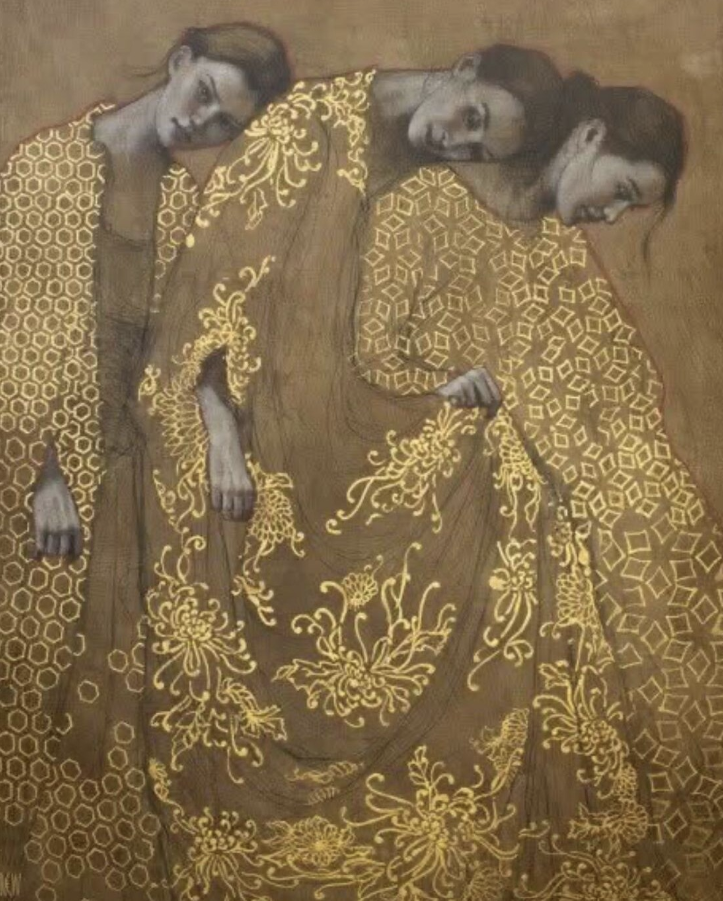
Not brief therapy
Some questions
cannot be answered quickly.
There are moments when life stops making sense in the way it used to. A loss, a separation, an illness, a move, an age. What sustained us gives way, and with it the story we told about who we were. In those moments a quick technique is not enough, and sometimes it is even an obstacle: it closes too early what needs to be opened.
Depth psychology starts from a simple idea: most of what moves us is not conscious. Dreams, symptoms, repetitions and sudden emotions are messages from a part of us that has not been heard. The work consists in learning to listen to it.
Existential work
The crisis is also
a threshold.
I do not treat an existential crisis as a malfunction to be repaired. I see it as a passage, painful and real, in which something old is ending and something new does not yet have a form. Grief, ruptures and the loss of meaning ask for time, for a stable presence and for a place where one can fall apart without being alone.
In that process we look at what repeats, at what was left unsaid, at the inner structures that shaped a life. Little by little, understanding stops being only an idea and begins to change the way one feels, chooses and relates.
The method
Inner Architecture™:
descend, integrate, rise.
Over my years of practice I built Inner Architecture™, a method in three movements. First, descending into the unconscious, into the shadow and into what we prefer not to see. Then, regulating and integrating the emotions that emerge, so that they can be lived and not only endured. Finally, rising with a direction of one's own, more truthful and less borrowed.
The method draws on psychoanalysis, on Jung, on Winnicott and on the symbolic traditions that have always mapped the inner journey. It is not a recipe; it is a way of accompanying.
Who accompanies you
A psychoanalyst
with a long practice.
I am a psychoanalyst and clinical psychologist, a member of the IPA, of FEPAL and of the Sociedad Psicoanalítica de Caracas, with more than twenty-five years of practice. Sessions last fifty minutes, at a regular time, in Barcelona or online, in English or in Spanish.
Meaning and loss
Making room
for what cannot be replaced.
A grief does not ask us to find a substitute for what has been lost. It asks us to live with the fact that something mattered and is no longer there in the same way. I make room for that absence without deciding how long it should take or what it ought to teach you. There may be sadness, anger, relief, guilt, or several contradictory feelings at once. We do not need to choose the acceptable one and silence the others.
Existential work also concerns the quieter ruptures: the day a successful life begins to feel borrowed, when a familiar identity no longer holds, when an old answer stops answering. I stay with the question rather than replacing it with a new ideal. Deep transformation is not becoming an improved version of a role you have outgrown. It can mean recognising what that role protected, what it cost, and what is now possible. There is no promised destination. There is a sustained way of listening to the life that is yours, including the parts you have not yet been able to welcome.
This work is for moments such as
- An existential crisis in which the old meaning no longer holds.
- A grief that does not find its way through.
- A life rupture: separation, migration, illness, the end of a stage.
- The wish for a deep transformation, not only relief.
Questions
A first conversation